

Why 2026 Will Redefine Mobile Payment Infrastructure & How Fintechs Should Prepare Now?
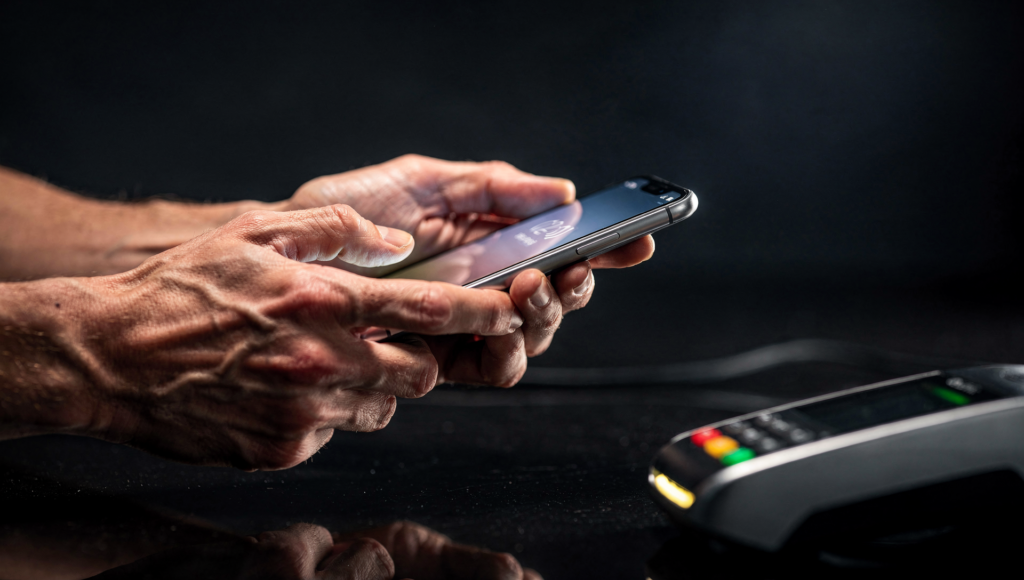
By 2026, mobile payments are no longer “a channel”; they are becoming the default interface for how consumers store value, pay, borrow, and identify themselves. Global mobile wallet users are expected to cross 5–5.5 billion, NFC-capable POS coverage will exceed 90% in many retail markets, and real-time rails will account for more than a quarter of all electronic payments worldwide. For fintechs, this is not just a UX shift — it is a deep infrastructure reset around wallets, tokenization, RTP, and orchestration, and teams that prepare in 2025–26 will own disproportionate share in the next cycle.
Why 2026 Is an Inflection Point?
- Mobile wallets are projected to handle well over half of global e‑commerce transactions and ~40% of POS by 2026.
- NFC-enabled terminals are expected to cover >93% of global retail locations by 2026, making tap-to-pay the default in developed markets.
- Real-time payment volumes crossed 260+ billion transactions in 2023 and are forecast to exceed 575 billion by 2028, representing more than a quarter of all electronic transactions.
- Tokenization already underpins the majority of card-not-present traffic and is expanding aggressively into in‑app and card-present via network and device tokens.
What “Mobile Payment Infrastructure” Really Means in 2026?
Core Capability Layers
| Layer | 2020 View | 2026+ Reality |
| Wallet | Balance + send money | NFC, QR, virtual cards, P2P, billpay, lending hooks, ID |
| Acceptance | Card terminals | NFC POS, QR everywhere, in‑app pay, wearables |
| Rails | Card + ACH | Card, RTP/UPI/Pix/SEPA Inst., A2A, closed-loop rails |
| Security | PCI + 3DS | Network + device tokens, biometrics, device binding, ML fraud |
| Ledger & settlement | Batch files, T+1/T+2 | Event-driven ledgers, near real-time posting & settlement |
| Orchestration | Single gateway | Routing across cards, RTP, wallets, BNPL, and local schemes |
Read More About How To Develop White Label Digital Wallet ?
The Three Big Shifts Redefining Infrastructure
A. Wallet-First, NFC + QR Everywhere
- In markets across APAC, GCC, and Africa, 82%+ of smartphone users used either QR or NFC payments in 2025, and adoption continues to surge.
- NFC-based contactless transactions are forecast to reach USD ~5 trillion by 2026, with mobile wallets driving a large share.
- QR is becoming a de facto universal interface in India (UPI), China (Alipay/WeChat), and increasingly GCC and Africa.
Implication for fintechs:
- Infrastructure must support both HCE-based NFC (and OEM wallets where needed) and static/dynamic QR standards (EMVCo, UPI, local QR specs) out of the box.
B. Real-Time Rails as Default
- More than 70+ countries now run real-time schemes; by 2030, 70% of all payments globally could be real-time, according to major industry research.
- Domestic systems like UPI, Pix, SEPA Instant, and others are becoming the preferred rails for P2P, bill pay, and increasingly merchant payments.
Implication:
- Your stack has to treat RTP events as first-class citizens, not bolt‑ons: think ISO 20022 messages, async posting, idempotency, and reconciliation across card + RTP + wallet flows.
C. Tokenization and Embedded Security
- Networks and issuers are accelerating network tokenization, replacing raw PANs with device- and merchant‑bound tokens, improving auth and reducing fraud.
- Mobile wallets lean heavily on device tokens + biometrics for step‑up security and SCA.
Implication:
- You need your own token vault / abstraction layer and deep integration with network tokenization (MDES/VTS/etc.), not just basic PCI scope reduction.
What a 2026-Ready Mobile Payments Architecture Looks Like?
Key Modules You Need
| Module | Core Requirements |
| KYC / Onboarding | API-driven KYC, local ID checks, biometrics-ready, tiered limits |
| Wallet & Ledger | Real-time, multi-currency event-driven ledger, with reconciliation hooks |
| NFC Payments | HCE, EMVCo contactless compliance, tokenization, OEM wallet integration |
| QR Payments | Static + dynamic QR, EMVCo/UPI/local standards, merchant & P2P modes |
| Virtual Cards | BIN sponsorship or issuer integration, lifecycle APIs, tokenization, controls |
| RTP / A2A Rails | UPI/Pix/SEPA Inst./Faster Payments APIs, alias systems, RTP-specific risk |
| Fraud & Risk | Rules + ML, device fingerprinting, behavioral analytics, 3DS/SCA orchestration |
| Orchestration Layer | Route by method, device, value, corridor; failover across rails |
| Analytics & Telemetry | Real-time dashboards, cohort analysis, risk and product analytics |
Read More About POS Payment Mechanism Development
How Fintechs Should Prepare Now (2025–26 Roadmap)?
A. Decide Your Wallet Strategy
- Move from “have a wallet” to “wallet is the core interface”:
- NFC tap-to-pay for retail.
- QR for micro‑merchants, P2P, and offline use cases.
- Virtual cards for e‑commerce and subscription use.
- Align with licensing: e‑money, wallet, or VASP/EMI licences where relevant.
B. Make Your Ledger and RTP-Ready Stack the Foundation
- Implement an event-driven, real-time ledger that can handle:
- Multi-rail posting (card, RTP, wallet, A2A).
- Reversible vs non‑reversible operations.
- Regulatory and audit requirements.
- Design reconciliation around files + APIs from multiple schemes and partners.
C. Treat Orchestration as a First-Class Component
- Build or adopt an orchestration layer that can:
- Choose rails (card vs RTP vs wallet) dynamically by value, user, corridor.
- Fail over across PSPs/acquirers or rails when there are outages.
- Support future rails (CBDC, cross‑border RTP links) without re-architecting.
D. Plan Your Build vs Infra-Partner Mix
- SaaS-only is often too rigid; fully custom from scratch is too slow for 2026 timelines.
- Many fintechs are shifting to white-label, source-owned infrastructure that can be tailored and evolved over time.
How PrimeFin Labs Helps You Build 2026-Ready Mobile Payment Infrastructure?
PrimeFin Labs focuses precisely on the infrastructure layer that 2026 demands: full-stack wallets, gateways, and orchestration, delivered as source-owned, cloud-native platforms.
What PrimeFin Labs Delivers ?
- Next-gen wallet core
- NFC (HCE + tokenization + EMVCo compliance).
- Static + dynamic QR rails aligned with EMVCo/UPI/local standards.
- Virtual card issuing integration (MDES/VTS etc.) with full lifecycle controls.
- Real-time ledger and multi-rail engine
- Event-driven, multi-currency ledger supporting cards, RTP, A2A, and wallet balances.
- Hooks into external rails (UPI, Pix, SEPA Inst., Faster Payments) with corridor-specific logic.
- Payment gateway & orchestration
- Acquirer-agnostic gateway with routing across card processors, aggregators, and local rails.
- Token vault, 3DS/SCA orchestration, fraud/risk integration points.
- Deployment & ownership options
- Cloud, hybrid, or on‑prem with source-code handover, avoiding future vendor lock-in.
PrimeFin Labs has reference architectures and components tailored for neobanks, super apps, PSPs, and regional wallets building across Asia, GCC, and Africa
Citation :
- Global mobile payment, RTP, and infrastructure trends (wallet penetration, RTP volumes, rail evolution)
https://www.mckinsey.com/industries/financial-services/our-insights/global-payments-report - Mobile wallet adoption, NFC/QR usage, and 2026 digital wallet trends
https://corporate.visa.com/content/dam/VCOM/regional/na/us/services/documents/vca-mobile-wallets-are-becoming-universal.pdf - Contactless and NFC payment growth, POS coverage, and 2026 statistics
https://www.absrbd.com/post/contactless-payment-statistics
- Real-time payments volume growth, country coverage, and RTP usage forecasts
https://www.aciworldwide.com/real-time-payments-report
- Mobile wallet app trends shaping the fintech industry in 2026 (NFC, QR, super apps)
https://community.nasscom.in/communities/industry-trends/mobile-wallet-app-trends-shaping-fintech-industry-2026
